The Court of Appeal’s decision in R (Nisar and Others) v SSHD; R (Mammedov) v SSHD [2025] EWCA Civ 1646 confirms that the precise language of Home Office deadline commitments determines whether a legal obligation is created, with direct consequences for costs recovery in settled immigration judicial reviews.

Background

The appeals concerned two separate judicial review claims against the Secretary of State for the Home Department (SSHD), which were heard together. In both, the appellants were foreign nationals living outside the UK whose applications for entry clearance as visitors had been refused. Following pre-action correspondence, the SSHD in each case agreed to withdraw the challenged decision and make a new one, indicating a timeframe for doing so. The fresh decisions were made shortly after the indicated dates and were again refusals. In the interim period between the deadline passing and receiving the decision, each appellant commenced a claim for judicial review challenging the delay. These claims were discontinued by consent once the decisions were received. The sole remaining dispute was over costs [§1–5].

In the case of Nisar, the appellants (a mother and her four children, all Pakistani nationals) had a protracted history of refusals and reconsiderations [§6–8]. In a letter dated 25 July 2023, the SSHD stated that “a decision regarding your client’s UK visitor visa will be made by the 21/08/2023, absent special circumstances” [§11]. The decision to refuse was made on 22 August but not served until 23/24 August 2023 [§12–13]. The judicial review claim had been lodged on 22 August 2023, the same day the decision was made but before it was communicated [§12, §16]. The parties agreed to discontinue the claim, leaving costs to be determined. Upper Tribunal Judge Sheridan made no order as to costs, finding both parties’ conduct contributed to the unnecessary proceedings [§16].

In the case of Mammedov, the appellant was a national of Turkmenistan who had been living in Turkey as a student since 2016 [§19]. The SSHD’s letter of 20 December 2024 stated that “Barring complexities, the SSHD aims to issue a reconsidered decision on your client’s visit visa application within 3 months of the date of this response to your letter before claim (by 20 March 2025, absent special circumstances)” [§20]. A reminder email was sent on Sunday 16 March 2025, warning that proceedings would be issued if no decision was made by the deadline [§22]. No decision was made by 20 March, and proceedings were issued on 21 March 2025 [§23]. A refusal decision was made on 28 March 2025 [§24]. The claim was discontinued by consent. Upper Tribunal Judge Hirst also made no order as to costs, citing the appellant’s failure to comply with the Pre-Action Protocol regarding the new issue of delay [§27].

Costs Issues Before the Court

The central costs issue in both appeals was whether the Upper Tribunal judges had erred in their discretion by making no order as to costs, rather than awarding costs to the appellants as the successful parties. The legal context was the settlement of judicial review proceedings before a substantive hearing, where the defendant public authority provides the substantive remedy (a decision) after proceedings are issued. The court was required to apply the principles from R (M) v Croydon LBC [2012] EWCA Civ 595 and related authorities to determine if the appellants could be considered “successful” and whether there was a sufficient causal link between the issued claim and the obtaining of the decision to justify a costs order in their favour [§30–36].

The Parties’ Positions

The appellants argued they were the successful parties as they obtained the remedy sought—a decision on their application—as a result of issuing proceedings. In Nisar, it was submitted that the SSHD’s unequivocal commitment to decide by a specific date created a legal obligation, the breach of which reasonably triggered litigation [§17]. The judge’s conclusion that the appellants should have chased for a decision was irrational. In Mammedov, the appellant argued the reminder email of 16 March was sufficient compliance with the Pre-Action Protocol, and a further formal letter was not required given the SSHD’s prior commitment and failure to act [§28].

The respondent SSHD opposed the appeals. It argued that in neither case were the appellants “successful” in a relevant sense, as the eventual decisions were refusals. It contended there was no, or insufficient, causal link between the issued claims and the decisions being made. In Mammedov, the SSHD supported the judge’s finding that a fresh Pre-Action Protocol letter was required to complain about the delay, a new issue not raised in the earlier correspondence.

The Court’s Decision

The Court of Appeal allowed the appeal in Nisar but dismissed the appeal in Mammedov. Applying the principles from R (M) v Croydon, the court held that the exercise of discretion on costs could be interfered with only if the judge erred in principle, considered irrelevant matters, or the decision was wholly wrong [§30].

In Nisar, the court found the claim fell squarely within category (i) of M v Croydon (where a claimant is wholly successful) [§48]. The SSHD’s letter of 25 July 2023 was sufficiently clear to amount to a legal obligation to decide by 21 August 2023, even if it was not an “enforceable undertaking” in the sense of being subject to specific performance or committal [§46]. The breach of that obligation, without citing special circumstances, made the issuance of proceedings reasonable. The court rejected the Upper Tribunal’s view that the appellants should have contacted the SSHD first, noting the unequivocal nature of the commitment [§46]. The claim was causative of the relief because, without the threat of litigation backed by the deadline, the delay would have been greater [§47]. The SSHD was therefore ordered to pay the appellants’ costs of the brief period up to the compromise [§48].

In Mammedov, the court found no error in the judge’s exercise of discretion [§49–50]. The SSHD’s letter used the language “aims to issue,” which did not create a legal obligation akin to the promise in Nisar [§49]. The issue of delay had not been raised in prior pre-action correspondence, and the delay had not reached the stage where it was so excessive as to be manifestly unreasonable [§49]. The Upper Tribunal was entitled to conclude that raising this new issue via a proper Pre-Action Protocol letter before issuing proceedings was reasonable and in accordance with the overriding objective. The failure to do so constituted a good reason to depart from the general costs rule [§49].

The court emphasised that Patten LJ’s statement in Speciality Produce Ltd v Secretary of State for the Environment [2014] EWCA Civ 225—that the claim “must be causative of the relief obtained”—was not to be treated as a statute nor as imposing a strict causation test in every case [§47]. The different outcomes in the two appeals turned on their distinct factual matrices, particularly the nature of the SSHD’s commitment and the reasonableness of commencing proceedings without further pre-action steps.

YouTube player

Costs In Withdrawn Judicial Review Claims

CPR 44.2 And The Courts’ Discretion As To Costs

CPR 38.6: Discontinuance And Costs – The Legal Principles

Summary Determination Of Costs Without A Trial

Who Should Pay The Costs Of A Withdrawn And Undetermined Application?

No Order As To Costs Despite Successful Application | Novelty And Conduct Considered

The High Court’s decision in Thomas v Secretary of State for the Home Department [2025] EWHC 3274 (KB) confirms that consent orders settling damages claims trigger the costs consequences under CPR 36.17.

Background

The claimant, Michael Anthony Thomas, a Jamaican national, brought proceedings against the Secretary of State for the Home Department for unlawful detention during early 2020. Following a contested hearing, judgment on liability was given on 22 November 2024, finding that the claimant had indeed been unlawfully detained for a period [§1]. The issue of quantum was adjourned for further submissions but was subsequently agreed between the parties [§2].

On 23 July 2025, a consent order was agreed [§3]. It recorded the defendant’s agreement to pay the claimant £16,000 in full and final settlement of his claim for damages, with the issue of legal costs remaining unresolved. The order provided a timetable for written submissions on costs, to be determined by the court without a hearing. Prior to the liability trial, the claimant had made four Part 36 offers, all for sums lower than the eventual £16,000 settlement figure [§5].

Costs Issues Before the Court

The primary issue for determination was whether the costs consequences under CPR 36.17 were triggered by the settlement [§6]. The rule provides enhanced costs consequences for a claimant who obtains a judgment at least as advantageous as their own Part 36 offer. The settlement sum of £16,000 exceeded all the claimant’s previous Part 36 offers. The dispute centred on whether a settlement encapsulated in a consent order constituted a “judgment” for the purposes of engaging CPR 36.17, or whether the rule required a formal judgment following a contested trial.

The Parties’ Positions

The Defendant’s Position: Counsel, Mr Gwion Lewis KC, argued that CPR 36.17 was not engaged [§7]. He relied on the rule’s title, “Costs consequences following judgment”, and its wording which refers to consequences applying “upon judgment being entered”. He submitted that the term “judgment” connoted an independent judicial decision on damages following a contested hearing [§8]. A settlement, even one embodied in a court order approved by a judge, was not a “judgment” and therefore the automatic costs consequences of Part 36 did not apply.

The Claimant’s Position: Counsel, Mr Gordon Lee, contended that the compromise contained within a sealed court order was equivalent to a judgment being entered [§9]. He argued this was merely a semantic difference. In support, he referred the court to the Court of Appeal authority of Vanden Recycling Ltd v Kras Recycling BV [2017] EWCA Civ 354 [§10], which considered the effect of a consent order in the context of claims against concurrent tortfeasors.

The Court’s Decision

The court found in favour of the claimant, holding that the true effect of the consent order of 23 July 2025 was to enter judgment in favour of the claimant in the sum of £16,000 [§15]. The court applied the reasoning from Vanden Recycling, where the Court of Appeal had focused on the substance and effect of a consent order rather than its precise wording [§12]. Hamblen LJ had stated that if an order requires a defendant to pay a specified sum in respect of the claimant’s claims and is a final order, then “in substance and in effect” it is the same as an order made following a judgment.

The court concluded that the mere fact that the word “judgment” did not appear in the consent order was of no consequence when considering the order’s effect [§13]. Indeed, an order made by the court following a trial could have been drafted in precisely the same terms. The consent order was enforceable in precisely the same way as if the court had awarded damages to the claimant at the end of the trial [§15]. This interpretation was supported by commentary in the White Book to CPR 40, which noted that the Civil Procedure Rules provide no clear basis for distinguishing between the terms “judgment” and “order” [§14].

The court recorded that the defendant had not argued it would be unjust in all the circumstances for the Part 36 costs consequences to apply, and the court observed there would be no reasonable basis for such a finding [§16].

As the settlement sum was more advantageous than the claimant’s Part 36 offers, the costs consequences under CPR 36.17 were engaged. The court accepted that the usual costs consequences should run from 8 November 2021, being 21 days after the first Part 36 offer of £15,000 [§17]. The court stated that the resulting order would follow the claimant’s written proposal (paragraph 10 of Mr Lee’s submissions), subject to two modifications: the interest rate on costs was set at 7%, and the claimant was required to bear the costs of the application dated 9 May 2025 to adduce a witness statement [§18].

YouTube player

Part 36 Consequences CPR 36.17 | Learning Curve v Lewis

CPR 36.17 And The Just Rewards Of A Good Part 36 Offer

CPR 36.17(4) | Just Consequences | Court Of Appeal Decision

CPR 36.17 | Part 36 Offer To Accept £1 Was A Genuine Attempt To Settle

CPR 36.17(4) And The Sometimes ‘Unjust’ Consequences Of Part 36

A costs-inclusive “Part 36 Offer” is NOT a Part 36 Offer

The Senior Courts Costs Office’s decision in MacInnes & Anor v DWF Law LLP [2025] EWHC 3252 (SCCO) establishes that the scope of a disclosure order for a solicitor’s “complete files” is defined by what the client was charged for, not by the firm’s internal document management practices.

Background

This matter concerned an application within detailed assessment proceedings brought under the Solicitors Act 1974 by the clients, Mr and Mrs MacInnes, against their former solicitors, DWF Law LLP. The substantive assessment related to invoices rendered by DWF for its work on an arbitration for the claimants.

On 4 September 2024, following a directions hearing, an order was made which included, at paragraph 4.4, a requirement for the Defendant to provide the claimants with “a complete digital copy of the Defendant’s files in connection with the instructions described upon the Amended Invoices” [§89]. The purpose was to enable the claimants to consider the reasonableness of the costs and, more fundamentally, to identify what work had been charged. The Defendant failed to comply with this order by the stipulated deadline.

Consequently, on 22 April 2025, the court made an unless order. It provided that unless the Defendant complied with paragraph 4.4 of the September order by 4pm on 20 May 2025, it would be debarred from participating further in the detailed assessment hearing, save for the purpose of giving evidence on any preliminary issues [§1]. On 20 May 2025, the Defendant filed an assertion that it had fully complied [§2]. The claimants disagreed and applied for a declaration that the sanction in the unless order had been triggered. In response, the Defendant made a precautionary application for relief from sanctions, to be pursued only if the court found it to be in default [§4].

Costs Issues Before the Court

The primary issue for determination was whether the Defendant had complied with the disclosure obligations under the unless order of 22 April 2025, and therefore whether the sanction of debarment was engaged. This turned on the interpretation of what constituted the Defendant’s “complete files” for disclosure.

The specific points of contention were:

      • Whether communications sent via WhatsApp and similar instant messaging platforms, for which the claimants may have been charged, formed part of the solicitor’s “file” and thus fell within the scope of the disclosure order.
      • Relatedly, whether the Defendant’s failure to search for and disclose such messages amounted to a breach of the order.
      • The significant discrepancy between the number of emails claimed for in the costs breakdown (2,758 from one fee earner alone) and the number actually disclosed (1,335), raising a serious concern that the disclosure exercise may have been incomplete [§165-167].

The resolution of these issues would determine the procedural status of the Defendant in the ongoing detailed assessment and preliminary issues hearing.

The Parties’ Positions

The Claimants’ Position: The claimants, represented by Nicholas Bacon KC, argued there had been a clear breach. They submitted that the order for a “complete digital copy” of the files encompassed all forms of communication relating to the billed instructions, irrespective of the platform used. They pointed to entries in the Defendant’s ledger which they argued showed charges being raised for work involving WhatsApp messages [§71-74]. The claimants contended that the Defendant’s internal policy or lack thereof—choosing not to save WhatsApp messages to its case management system—did not absolve it from the obligation to disclose them if they related to charged work. The failure to even attempt to contact former fee earners to retrieve such messages demonstrated non-compliance [§6, §134-135]. The claimants also highlighted the discrepancy in email numbers as evidence that the disclosure exercise was incomplete [§34-35].

The Defendant’s Position: The Defendant, represented by Robin Dunne, maintained it had complied. It argued that the content of its “file” was a matter for it to define, and its position was that WhatsApp messages did not form part of it [§70]. The Defendant pointed to the practical difficulties of extracting such messages from personal or company mobile devices, especially from staff who had left the firm, and cited privacy concerns [§53-56]. It argued that any WhatsApp communications would have been short, administrative messages not containing substantive advice, and that the claimants likely already possessed messages sent to them directly [§127, §143-144]. The Defendant characterised the claimants’ application as an impermissible attempt to obtain specific disclosure through the “back door” of an unless order, bypassing the proper procedure under CPR Part 31 [§43, §63-64]. It relied on the witness evidence of its partner, Joel Heap, who stated the firm believed such messages were not part of the file and that a thorough search for disclosable documents had been conducted [§44, §126-127].

The Court’s Decision

Costs Judge Nagalingam granted the claimants’ application, declaring that the Defendant was in breach of the unless order [§195]. The sanction was therefore engaged, subject to a correction under the slip rule.

The court’s analysis focused on the proper interpretation of the disclosure order. The judge rejected the Defendant’s narrow definition of its “file” as being limited to documents saved on its Digital Case Management System (DMS). The order required a copy of the Defendant’s “complete files in connection with the instructions” [§89, §92-93]. The judge held that the defining criterion was not the medium of communication, but whether the client had been charged for the work in question. If a communication, whether by letter, email, WhatsApp, or any other platform, had generated a charge on the amended invoices, then it necessarily formed part of the file for disclosure purposes [§101].

Crucially, the judge made clear that this was not a decision that WhatsApp messages form part of a solicitor’s file as a matter of course. Rather, it was a decision which reflects that “regardless of the medium or platform used, if a charge is raised to the client then the related communication forms part of the file” [§102].

The judge concluded, on the available evidence, that the ledger demonstrated charges being raised for WhatsApp communications. Upon analysing the ledger, and distinguishing between time spent reviewing WhatsApp evidence in the underlying arbitration and time spent on WhatsApp communications with the client, the judge identified entries dated 03/08/2020, 09/11/2020, 16/11/2020, 01/02/2021, 10/11/2021 and 17/12/2022 that implied charges were raised for the latter [§159-160]. The absence of a witness statement from the author of the costs breakdown, who could have clarified this, counted against the Defendant [§162-163].

The court was unpersuaded by the Defendant’s reliance on privacy and practical difficulty arguments. It noted the Solicitors Regulation Authority’s (SRA) thematic review of asylum legal services dated 30 July 2024, which emphasised the need for firms to have policies on using messaging apps and to ensure relevant communications are saved to the client file [§110-116]. The Defendant’s lack of such a policy and its failure to even ask former staff for relevant messages undermined its position [§134, §176].

The judge also expressed serious concern over the discrepancy in email numbers, noting that one has to at least entertain the possibility that the missing emails are in fact routine digital messages sent via other means [§142, §169-170]. This further indicated the disclosure may have been incomplete.

In conclusion, the judge found the Defendant had failed to disclose all documents relating to matters for which the claimants were charged, and was therefore in breach of the unless order [§195]. The sanction of debarment was activated. However, applying the slip rule under CPR 40.12 [§196], the judge amended the sanction clause. The original order debarred participation “save for the purpose of giving evidence on any preliminary issues”. The judge corrected this to “save for the purpose of any preliminary issues hearing in which evidence might otherwise be heard”, accurately reflecting the ex tempore judgment [§206-207]. Consequently, the Defendant is debarred from the main detailed assessment but may participate in the listed preliminary issues hearing in February 2026 [§208].

The costs of the application were reserved, as elements of it remained part-heard [§197]. The parties were given directions to confirm whether they would pursue the remaining parts of the claimants’ application and the Defendant’s relief from sanctions application [§198-200].

YouTube player

Solicitor and client assessments: Introduction

Court Declines To Bifurcate Solicitors Act Assessment

Unless Orders In Respect Of Outstanding Costs Orders | Can’t Pay Or Won’t Pay?

Court Deprecates Paying Party’s Opportunistic Conduct In Detailed Assessment Proceedings

Orders: The slip rule

Points Of Dispute In Solicitor And Client Assessments | It’s In The Detail

The High Court’s decision in Baroness Lawrence of Clarendon OBE & Ors v Associated Newspapers Limited [2025] EWHC 3207 (KB) confirms that claimants combining to pursue a common factual case may face joint and several liability for the defendant’s common costs, with significant implications for ATE insurance structuring in multi-party litigation.

Background

A group of seven high-profile individuals, including Baroness Lawrence, Sir Elton John, and Prince Harry, the Duke of Sussex, brought separate claims against Associated Newspapers Limited (the Defendant). Their individual claims have been case managed together and are heading towards a combined trial of all issues in all claims [§11]. A key feature of the litigation was that each claimant relied not only on allegations specific to them but also on a substantial body of similar fact and generic allegations common to all claims. Each claimant’s pleading expressly relied on the common allegations as a “modus operandi” supporting their individual case [§10].

At a costs and case management conference (CCMC) in November 2024, the court made an order that included definitions for ‘Individual Costs’ and ‘Common Costs’ for the purposes of costs management and for sharing the claimants’ own costs amongst themselves [§5]. This order did not, however, address the potential liability of the claimants for any adverse costs orders in favour of the Defendant [§6–7]. Following that order, the claimants obtained After-The-Event (ATE) insurance policies totalling approximately £14.1 million (£2.35 million per claimant), calculated on the basis of several liability for any adverse costs [§9, §19]. The Defendant subsequently applied for a determination on the nature of the claimants’ potential liability for costs. Separately, both parties applied to vary their court-approved costs budgets upwards, citing significant developments in the litigation.

Costs Issues Before The Court

The court was required to determine two discrete costs issues. The first was the Defendant’s application for an order specifying that, if any claimant was ordered to pay costs to the Defendant, they would be severally liable for their own ‘Individual Costs’ but jointly and severally liable with any other unsuccessful claimant(s) for the Defendant’s ‘Common Costs’ [§3]. The second issue concerned the competing applications by both the claimants and the Defendant to increase the budgets for several phases of the litigation, namely: Issue/Statements of Case, CMC, Disclosure, and Witness Statements [§33].

The Parties’ Positions

    • The Defendant’s Position on Costs Liability: The Defendant, represented by Roger Mallalieu KC, argued that the claimants were pursuing a collective strategy based on common allegations, with each claimant’s case relying on and supporting the others [§10–11]. Citing authorities including Stumm v Dixon (1889) 22 QBD 529, Dufoo v Tolaini [2014] EWCA Civ 1536, Rowe v Ingenious Media Holdings plc [2020] EWHC 235 (Ch), and Ontulmus v Collett [2014] EWHC 4117 (QB), it was submitted that where parties combine to present a common claim or defence, the established principle is that they are jointly liable for the costs of that common endeavour [§12]. The Defendant relied on the claimants’ correspondence seeking several liability and on their ATE arrangements as reasons to determine costs liability at this stage [§8–9].
    • The Claimants’ Position on Costs Liability: The claimants, represented by Andrew Hogan, resisted the application [§15]. They argued that costs orders should ordinarily be made at the end of a case and that no good reason had been shown for a pre-emptive order [§16]. They submitted that their claims remained separate, with distinct individual elements, and that their ATE insurance had been reasonably obtained on a several liability basis [§19]. Imposing joint and several liability now could force them to seek additional, costly insurance cover to guard against the risk of being left solely liable for common costs if a co-claimant could not pay [§9, §19]. In the alternative, they argued that if an order was made, it should be for several liability only, citing factors including that these were separate claims brought by seven individuals in six claims, represented by three firms of solicitors [§22].
    • Positions on Budget Variations: Both parties filed Precedent T forms seeking increases in four phases of their budgets: Issue/Statements of Case, CMC, Disclosure and Witness Statements [§33]. The claimants relied on the need for Amended Replies, an additional CMC, extra disclosure work and the increased number of Defendant witness statements [§39, §48, §55, §66]. The Defendant pointed to the burden of answering significantly amended Particulars of Claim, the additional CMC, the costs of maintaining a legacy email archive and the increased number of its own witness statements [§44, §52, §59, §70]. The court then applied CPR 3.15A, assessing in each case whether there had been a ‘significant development’ and what sums were reasonable and proportionate [§34–37].

The Court’s Decision

Costs Liability Application: The court granted the Defendant’s application [§23]. It held it had jurisdiction under its wide case management powers (CPR 3.1) to make such an order, and that costs sharing orders had become “commonplace in multi-party actions where parties combine to litigate common issues” [§24].

The court applied the principle from Stumm v Dixon that each party is liable jointly with each other for the whole of the reasonable costs of their common claim or defence, but only severally for the individual costs of their claim [§25–26]. The court referred to Rowe v Ingenious Media Holdings plc, noting that it emphasised the need to pay particular attention to “the nature of the claim” when deciding whether to order joint or several liability for costs [§27]. The present case was materially different: the claimants’ cases depended “not merely on them bringing the same central case based on the Similar Fact and Generic cases, but also on each individual Claimants’ own specific case being said to cross support each of the other Claimants’ cases and the collective case as a whole” [§30].

The court rejected the argument that the decision should be deferred. It considered it “imperative” that the claimants understood the consequences of the way the litigation was being conducted, particularly given the substantial costs already incurred and further substantial trial-preparation costs to come [§31]. The fact that the claimants might need to reassess their ATE insurance was “in their own best interests” and not a reason to refuse the order [§31]. The order would not “tie the court’s hands” if circumstances later justified a departure [§32].

Budget Variations: The court assessed each variation request against the test in CPR 3.15A, requiring a ‘significant development’ in the litigation [§34–36]. It noted that “if agreement cannot be reached on a figure for a particular phase of the budget, the Court is not bound by any offer which has been made” [§37].

For the Claimants:

      • Issue/Statements of Case: Sought £139,295 (£36,120 time costs plus £103,175 disbursements); allowed £20,000 [§39–43]. The court found the Replies went beyond their proper function and, regarding the Ward Allegations, “impermissibly advanced a factual case that contradicted the case advanced in the Particulars of Claim” [§42].
      • CMC: Sought £200,000; allowed £200,000 in full [§48–51]. A further CMC was a significant development not previously contemplated.
      • Disclosure: Sought £495,520; allowed £80,000 [§55–58]. The court held the claimants were “largely responsible for their own failure to undertake the disclosure exercise properly in the first place” and had only obtained “several discrete but limited orders for disclosure against the Defendant” [§57].
      • Witness Statements: Sought £175,000; allowed £50,000 [§66–69]. The budget had assumed the Defendant would serve a maximum of 30 witness statements; 11 further statements required consideration, which constituted a significant development.

For the Defendant:

      • Issue/Statements of Case: Sought £958,558; allowed £95,000 [§44–47]. The court accepted this was a “more legitimate” request given the claimants’ “significant amendments” imposing “a significant burden to answer and investigate new allegations” [§46]. The preparation of supplemental witness statements could not fall within this phase.
      • CMC: Sought £200,000; allowed £200,000 in full [§52–54].
      • Disclosure: Sought £424,439 (including £357,919 for server costs); allowed £357,919 [§59–65]. The claimants argued that the cost of maintaining a legacy email archive was a business overhead and not a “legal cost” under CPR 44.1, citing London Scottish Benefit Society v Chorley (1884) 13 QBD 872. The court rejected this argument, accepting the Defendant’s evidence that the server cost was “only being incurred by reason of this litigation” and was therefore an expense “necessarily arising from the litigation and necessarily caused by the course which it takes” [§64–65].
      • Witness Statements: Sought £250,800; allowed £90,000 [§70–73]. The increase in witness numbers was “because the scope of the claim has expanded by amendment, bringing in new allegations” [§72].

The court also noted that the November 2024 order required amendment to constitute a proper costs management order as mandated by CPR 3.15(2), observing that “parties seldom draft proper or effective costs management orders” [§74–77].

YouTube player

Reasonable Joint Costs Recoverable In Full Regardless Of Number Of Defendants

Group Litigation: A Determination Of Costs Related To Common Issues

CPR 3.15A | Costs Budget Revisions | Significant Developments And The Need To Act Promptly

Costs Budgeting | Significant Developments

Costs Budgeting, Proportionality And Incurred Costs

Security For Costs In UK Civil Litigation


The High Court’s decision in Taiwo v Homelets of Bath Limited [2025] EWHC 3173 (KB) demonstrates when exceptional circumstances justify departing from the general rule that respondents do not recover costs for attending permission to appeal hearings.

Background

The claim arose from events in 2010 when the defendant, Homelets of Bath Limited, sought to evict the claimant, Wemimo Mercy Taiwo, from a property in Bath. The claimant succeeded at a liability trial in 2018, where it was found she had been harassed and assaulted [§1]. The matter proceeded to a quantum trial to assess damages, with the claimant seeking approximately £2 million for psychiatric injury, injury to feelings, and loss of earnings [§2].

At the quantum trial before HHJ Blohm KC, the defendant successfully invoked section 57 of the Criminal Justice and Courts Act 2015. The judge found the claimant had been fundamentally dishonest regarding three matters: the genuineness of her marriage, her claims for Employment Support Allowance benefits, and the deliberate exaggeration of her disability from October 2013 onwards [§3]. Consequently, the entire claim was dismissed, including the claim for Vento damages for injury to feelings, which the court confirmed fell within the definition of “personal injury” for s.57 purposes [§84-89]. The judge also determined the claimant was no longer a protected party.

At a consequentials hearing on 13 March 2025, the judge ordered the claimant to pay the defendant’s costs of the claim, to be assessed on an indemnity basis, with an interim payment of £25,000 [§4]. The appointment of Mr Emmanuel Diamond as the claimant’s litigation friend was terminated. Furthermore, Mr Diamond and Mr Abayomi Bamidele Odebode were joined to the proceedings as additional defendants for the purpose of considering non-party costs orders under section 51 of the Senior Courts Act 1981.

The claimant sought permission to appeal both the quantum trial order and the consequentials order. The original Appellant’s Notice was filed by the claimant, and Mr Diamond later filed an N161 seeking a re-hearing of the permission application [§6, §11]. Permission was refused on the papers by Sheldon J on 28 March 2025 [§10]. This judgment concerns the oral renewal of that application for permission to appeal. A separate non-party costs order was later made against Mr Diamond and Mr Odebode on 6 August 2025 [§16]. Numerous further applications were made by the claimant and Mr Diamond throughout the appeal process.

A notable feature of the proceedings was the submission of documents containing false legal authorities, including citations to non-existent cases such as “Irani v Duchy Farm Kennels [2020] EWCA Civ 405” and “Chapman v Tameside Hospital NHS Foundation Trust [2018] EWCA Civ 2085” [§25-27]. The court found these were “no doubt falsely created by AI” and rejected Mr Diamond’s explanation that he had “stepped back” from the litigation when these documents were prepared [§26].

Costs Issues Before the Court

The court was required to determine several distinct costs issues arising from the litigation history. The primary issue was whether to award the respondent its costs of attending the oral renewal of the permission to appeal hearing, which is generally not permitted under the standard rules [§141]. A related issue was the appropriate basis and percentage of any such costs award. The court also had to consider the claimant’s liability for the costs orders made at the quantum trial consequentials hearing, namely the indemnity basis costs order and the £25,000 interim payment, the stay on which was now lifted [§119-120]. Additionally, the court had to address the procedural validity and merits of the appeal against the consequentials order, which included the termination of the litigation friend and the joinder of parties for non-party costs. Finally, the court was tasked with deciding whether to impose a civil restraint order on the claimant and/or Mr Diamond due to the manner in which the litigation and appeals had been conducted [§127].

The Parties’ Positions

The respondent sought its costs of responding to the application for permission to appeal. It requested that these costs be assessed on an indemnity basis, with an interim payment of £15,000, plus a summarily assessed sum of £4,000 for dealing with the civil restraint order application [§140]. The respondent invited the court to depart from the general rule in Practice Direction 52B paragraph 8.1 that respondents are not usually awarded costs for attending permission hearings, relying on the guidance in Mount Cook Land Ltd v Westminster City Council [2004] 2 Costs LR 211 [§141-142].

The applicant objected to any costs order being made against her [§140]. While her formal position on the respondent’s application was not detailed in the judgment beyond a general objection, her conduct and submissions throughout the proceedings formed the backdrop to the court’s assessment. The applicant, through Mr Diamond, had filed multiple iterations of grounds of appeal and skeleton arguments, some of which contained bogus legal authorities [§9-10]. The court noted that Mr Diamond appeared to be advancing arguments on the joinder issue for his own benefit rather than the claimant’s [§124].

The Court’s Decision

The court refused permission to appeal against both the quantum trial order and the consequentials order, finding none of the grounds to be reasonably arguable [§108, §126]. It also refused to extend time for the appeal against the consequentials order. The stay on the costs orders from the consequentials hearing was lifted, meaning the claimant was liable for the defendant’s costs on an indemnity basis, subject to detailed assessment, and was required to make the £25,000 interim payment [§119-120].

On the costs of the permission to appeal hearing, the court departed from the general rule in PD 52B paragraph 8.1 and made an order in the respondent’s favour [§144]. Applying the guidance from Mount Cook at paragraph [76], Constable J found exceptional circumstances. These included the hopelessness of several grounds of appeal, the persistent pursuit of those grounds through numerous repetitive and undisciplined submissions, and the citation of false authorities, which the judge found had “undoubtedly added considerably to the burden on the Court and on the Respondent” [§143]. The judge noted that not all arguments were hopeless, so a full award was not appropriate. Balancing these factors, the court ordered the applicant to pay 75% of the respondent’s reasonable costs incurred from the date of Sheldon J’s paper refusal (28 March 2025), including any costs dealing with the CRO, to be assessed on the standard basis if not agreed, with an interim payment of £7,500 [§144].

The court also granted a limited civil restraint order against both the claimant and Mr Diamond [§132]. This was justified by two applications found to be totally without merit: the application struck out by Bourne J [§127] and the earlier appeal against a costs budgeting decision, which Sheldon J had found to be “misconceived and unarguable” [§130]. The judge cited the persistent and undisciplined conduct of the litigation, including the submission of an unsolicited witness statement after the draft judgment was circulated, as further demonstration of the need for restraint [§136].

The judgment also affirmed the indemnity costs order from the consequentials hearing. It found no arguable basis to appeal the indemnity basis, holding that there could be no appeal against it “in principle given the Applicant’s failure to beat a Part 36 Offer“, and confirmed that the indemnity assessment and £25,000 interim payment should now take effect [§119]. Furthermore, it found the joinder of Mr Diamond and Mr Odebode for non-party costs consideration to be not reasonably arguable as a ground of appeal, noting Mr Diamond’s deep involvement in the claim’s conduct [§122-124].

YouTube player

Indemnity Costs Awarded For Unsubstantiated Fraud Allegations In Original Pleading

Failed Fraud Allegations Justify Indemnity Costs Order Despite Proper Conduct

Non Party Costs Orders | Court Of Appeal Decision

Fundamental dishonesty found on appeal by reason of material non disclosure

Dishonest Evidence And Baseless Allegations Justify Indemnity Costs Order

Indemnity Costs And The High Risk Of Pursuing A Weak Case

The High Court’s decision in Matrix Receivables Ltd v Musst Holdings Ltd [2025] EWHC 3204 (Ch) confirms that the “paying party” test is not determinative where a claimant’s overall recovery is a fraction of its claim and its principal claims have failed.

Background

The claim arose from a dispute concerning the introduction of investment customers to a fund manager, Astra. The claimant, Matrix Receivables Limited, was the assignee of a claim originally belonging to Matrix Money Management Limited (MMM). It alleged that MMM had played a significant role in introducing two customers, 2B and Crown, to Astra via the defendant, Musst Holdings Limited. Matrix claimed it was entitled to a share of the management and performance fees subsequently received by Musst from Astra.

The claim was advanced on two alternative bases: in contract and in unjust enrichment. The proceedings were brought in 2020 in the Business and Property Courts under case number BL-2020-001417. A substantive trial took place over seven days [§46]. In the main judgment, [2025] EWHC 2487 (Ch) [§1], the court dismissed the contractual claims in their entirety. On the unjust enrichment claims, the court found that Matrix was entitled to a share of the management fees received by Musst after 4 September 2014, awarding judgment in the sum of £175,380.76 plus interest [§2] (referred to elsewhere in the judgment as approximately US$175,000 [§34]). Matrix had sought 80% of management fees but was awarded 40% in respect of one customer and 20% in respect of another, with further reduction because receipts prior to September 2014 were statute-barred [§39]. The larger claim for a share of the performance fees was dismissed on the basis that the chain of causation between MMM’s introductory services and Musst’s eventual receipt of those fees had been broken. The court found that whatever service was provided in 2012 was “eclipsed” by the years of costs, risk and litigation effort undertaken by Musst against Astra, coupled with the lack of assistance—indeed opposition—on the part of Mr Reeves, the controller of Matrix [§40].

Following the substantive judgment, a consequentials hearing was held on 4 November 2025 to determine issues including interest, permission to appeal, costs, and a stay of execution [§1, §3]. Permission to appeal was refused, the court finding no real prospect of success [§15]. This blog post focuses on the court’s analysis and decision regarding costs.

Costs Issues Before the Court

The primary issue for the court was determining the appropriate costs order following a judgment where the claimant had succeeded on only a small part of its overall claim. The court needed to decide which party was the “successful party” for the purposes of CPR 44.2, and whether to depart from the general rule that the unsuccessful party pays the successful party’s costs. This involved a detailed evaluation of three matters: the relative success and failure on the different heads of claim (contract, management fees, performance fees); the proportionality of the recovery to the costs incurred; and the conduct of the parties—particularly the principal witness for the claimant.

The Parties’ Positions

Matrix’s Position: Matrix argued it was the successful party because it was the party to whom money was ordered to be paid [§16]. It relied on authorities such as AL Barnes v Time Talk [2003] EWCA Civ 402, Day v Day [2006] EWCA Civ 415, and Fox v Foundation Piling Ltd [2011] EWCA Civ 790, which emphasise that in commercial litigation, the “surest indicator of success” is identifying who has to pay money at the end of the case [§16–17]. Matrix also cited Global Energy Horizons v Gray [2021] Costs LR 133 for the proposition that a defendant facing an exorbitant claim should protect its position through a Part 36 offer [§19]. It submitted that the absence of a Calderbank or Part 36 offer from Musst was significant, as such offers are the recognised mechanism for a defendant to protect its position on costs [§25]. Matrix contended that the unsuccessful contract and performance fee claims did not substantially increase costs, as they were based on the same facts as the successful management fee claim [§23].

Musst’s Position: Musst contended that, looking at the substance of the litigation, it was the successful party [§26]. It relied on the test from Medway Primary Care Trust v Marcus [2011] EWCA Civ 750, which asks “who, as a matter of substance and reality, has won?” [§26]. Musst argued that “the juice” of the action was the claim for performance fees, which failed entirely [§34]. The recovery for management fees was less than 5% of the total sums claimed and was dwarfed by the costs of the action [§34–35]. It submitted that maintaining the weak contract claims until trial was unreasonable conduct [§36]. Musst also pointed to the conduct of Mr Reeves (Matrix’s controller), who had actively assisted Astra in litigation against Musst—a position fundamentally at odds with Matrix’s claim for a share of the fees generated by that very litigation [§36].

The Court’s Decision

The court held that the just order was that there should be no order as to costs [§81]. In reaching this decision, Sir Clive Freedman (sitting as a Deputy Judge of the High Court) conducted a detailed evaluation, proceeding through three stages of analysis.

The “Paying Party” Test

The court acknowledged the force of the “paying party” test, describing it as “highly relevant” [§38]. However, it concluded that the test was not “the be all and end all of the analysis” on the unusual facts of this case [§38]. The court expressly declined to treat the first instance decisions of Hamad Aldrees v Rotex [2019] EWHC 526 (TCC) and Rotam v GAT [2018] EWHC 3006 (Comm)—both of which had looked beyond the paying party test—as wrongly decided [§38].

Evaluating Success and Failure

The court found that it was “artificial” to label either party as the overall winner [§76]. While Matrix had secured a money judgment, its success was limited to a small fraction of its claim. The claim for performance fees—described as “the only sensible raison d’être for the claim being commenced or continuing” [§73]—had failed completely, as had the alternative contract claims. The sum recovered was “small relative to the costs of the claim as a whole” [§80(5)]. The court noted that if the claim had been confined to the management fees from the outset, it would likely have been conducted more proportionately, “confined to say 3 days rather than 7 days” and without the involvement of leading counsel [§46].

The court also drew a connection between delay and the costs outcome. The same unexplained delay in obtaining the assignment from MMM and bringing the claim that led to the refusal of pre-action interest [§5–6] also featured in the conduct analysis, reinforcing the conclusion that Matrix could not claim the full fruits of success [§68].

Conduct

The court considered the parties’ conduct to be a relevant factor under CPR 44.2 and 44.4 [§55–57]. It was critical of Matrix for maintaining “at best very weak” contract claims right up to trial [§53]. The claims were “barely maintained” from the opening and formally abandoned at the end of the trial; the court found there was “nothing to it” and Matrix should have notified Musst so that it would not have had to prepare to meet them [§53, §72].

More significantly, the court found the conduct of Mr Reeves justified a “significant adjustment” in the costs order [§69]. His actions in supporting Astra against Musst in parallel litigation—including providing disclosure, a witness statement, and giving evidence at trial for Astra—were “entirely at odds” with Matrix’s interests in the instant case [§60]. The court found that this was not merely a rejection of evidence, which is commonplace, but a “very stark and unusual” situation involving fundamentally contradictory positions [§65]. Mr Reeves’ evidence was found to have “all the hallmarks of someone who has suspended truth for his own changing interests from time to time” and to “appear to turn with the wind” [§61–62]. The court was entitled to deprecate this conduct and take it into account in respect of the costs of the action [§66–67].

Conclusion

The court concluded that neither party was successful [§76]. Even if Matrix were to be regarded as the successful party by virtue of being the receiving party, the numerous factors outlined—including the total failure of the contract claims, the total failure of the performance fees claim which was “the juice of the action”, the partial failure on management fees, the very small amount recovered relative to both the claim and the costs, and the criticised conduct of Mr Reeves—provided ample reason to depart from the general rule [§79–80]. The court ordered that there be no order as to costs [§81].

YouTube player

Issues Based And Proportional Costs Orders: When Should They Be Made?

Partial Success, Conduct, Offers And Alleged Exaggeration

Some You Win Some You Lose | Partial Success And The Courts’ Approach To Costs

CPR 44.2 And The Courts’ Discretion As To Costs

Speculative Claims, Indemnity Costs And The Effect Of An Approved Costs Budget

The Approach To Issues Based Costs Orders

The Court of Appeal’s decision in R (Halton Borough Council) v Secretary of State for Housing, Communities and Local Government [2025] EWCA Civ 1566 establishes that parties to planning inquiries are not expected to second-guess their experts, and an expert’s concessions under cross-examination do not automatically justify a costs award.

Background

In September 2017, a developer, MJ Gleeson, submitted a planning application to Halton Borough Council for 139 dwellings on land in Runcorn. The Health and Safety Executive objected on public safety grounds due to the site’s proximity to the Runcorn Chemicals Complex. Despite this, the Council resolved to grant permission, relying on its adopted development plan and advice from its specialist risk consultants, DNV.

Consequently, the Secretary of State called in the application in May 2021. A public inquiry was scheduled. The Council and HSE served statements of case and proofs of evidence. The Council’s evidence on public safety was given by its expert, Mr Hopwood of DNV. The developer submitted a position statement indicating that, as the public safety matter was between the Council and the HSE, it would rely on the Council to provide evidence in support of the application [§6]. A national security direction was made, meaning part of the inquiry would be held in private.

The inquiry opened on 11 January 2022. In closed session on 13 January, Mr Hopwood was cross-examined by Mr Kimblin QC on behalf of the HSE [§10]. Under questioning, he conceded that the local policy relied upon by the Council failed to follow the principles in the National Planning Policy Guidance and that, following those principles, he would advise strongly against granting permission. This was inconsistent with his previous advice.

Faced with this, the Council withdrew its support for the development. The applicant then withdrew the planning application, causing the inquiry to collapse. Both the HSE and another interested party, Viridor Energy Limited (which operated one of the UK’s largest energy-from-waste plants near the site [§7]), applied for their costs of participating in the aborted inquiry against the Council.

On 27 July 2022, the Secretary of State’s decision-maker, Mr Parsons, allowed the applications in part. He found the Council’s decision to withdraw its support when it did was unreasonable, causing the other parties to incur unnecessary wasted expense. He awarded costs from the date of their Rule 6 statements. The Council’s application for judicial review of this costs decision was dismissed by Fordham J. The Council appealed to the Court of Appeal.

Costs Issues Before the Court

The central issue on appeal was whether the Secretary of State’s decision to award costs against the Council was lawful. This required examination of whether the finding of unreasonable conduct was rational and whether adequate reasons were given. The case turned on the application of the Secretary of State’s Planning Practice Guidance on awards of costs, particularly in the context of a called-in application. The court had to consider whether the Council’s reliance on its expert’s evidence up to the point of his damaging cross-examination, and its subsequent withdrawal of support, constituted a failure to comply with “normal procedural requirements” or was otherwise unreasonable behaviour justifying a costs award.

The Parties’ Positions

The Council argued that Mr Parsons’ decision was flawed. It contended that its withdrawal of support was a direct and reasonable consequence of its expert witness changing his evidence under cross-examination, which was a material change in circumstances. It submitted that there was no identifiable “normal procedural requirement” it had breached and that it was not unreasonable to rely on its appointed expert’s written evidence until it was tested and found wanting during the inquiry. The Council drew an analogy with criminal costs cases, arguing that a party is not responsible for an expert’s unexpected failure under cross-examination unless the evidence was obviously untenable from the outset [§46-51].

The Secretary of State defended the decision. It was argued that the Council had a responsibility to ensure its evidence was robust enough to withstand scrutiny and to continuously appraise its position as the inquiry progressed. The submission was that the Council’s late withdrawal, after the other parties had incurred substantial preparation costs, was a procedural failure that amounted to unreasonable behaviour. The Secretary of State maintained that the reasons given were adequate and the decision was within the bounds of rationality.

The Court’s Decision

The Court of Appeal unanimously allowed the appeal. Lord Justice Lewison, giving the lead judgment (with which Lady Justice Asplin and Lord Justice Coulson agreed [§69-70]), identified demonstrable flaws in the reasoning of the costs decision.

First, the court found an irreconcilable contradiction in Mr Parsons’ reasoning. He accepted the Council withdrew support due to new evidence given under cross-examination, yet simultaneously concluded there had been “no material change in the evidence” [§35]. This was a clear logical error — “a leap in reasoning which fails to justify the conclusion” and “a demonstrable flaw in the reasoning” [§35].

Second, the court held that the decision-maker set the bar too high in effectively requiring a party to guarantee its expert evidence would survive cross-examination [§59]. The judgment clarified that testing an expert’s evidence to see if it would withstand cross-examination is not a “normal procedural requirement” in planning inquiries [§61]. The reason for instructing an expert is their independent expertise, which the instructing party does not possess. A party is not expected to second-guess its expert as a matter of routine [§61]. The mere fact that an expert’s evidence is later undermined does not, without more, render the party’s prior reliance on it unreasonable [§45].

The court noted the Council had held multiple conferences with its expert and counsel, which aligned with good practice recommended by the RTPI [§65]. There was no finding that the expert’s initial proof was obviously flawed or failed to provide a “respectable basis” for the Council’s position [§57]. Furthermore, the damaging concessions related to the validity of local policy — a matter not obviously within the public safety expert’s core remit — making it harder to foresee that such questions would be put to him [§66].

The judgment emphasised that the costs decision failed to identify what the Council did wrong or at what point its conduct became unreasonable [§62]. There was no specific procedural rule breached, nor any direction from the inspector ignored [§55]. The link between the withdrawal and a finding of unreasonable conduct was, therefore, “tenuous, to say the least” [§62]. The Court of Appeal concluded that the Council had a good reason to withdraw when it did and that the finding of unreasonable behaviour was untenable [§67].

YouTube player

Costs In Withdrawn Judicial Review Claims

Interested Party In Judicial Review Pays The Price For Unreasonable Resistance To Consent Order

Who Should Pay The Costs Of A Withdrawn And Undetermined Application?

Indemnity Basis Costs Following Discontinuance

Experts’ Fees | How Much Detail Is Required On Detailed Assessment?

The County Court’s decision in Barry v Essex County Council [2025] EWCC 64 confirms that enhanced interest on costs awarded under CPR 36.17(4)(c) is calculated using the aggregate costs method from the date of offer expiry. This is of course a first instance non-binding decision in the county court and should be treated accordingly.

Background

The claimant, Kelly Barry, brought a claim for damages against Essex County Council for personal injuries sustained in a tripping accident on 18th March 2018. Liability was denied by the defendant. On 7th October 2019, the claimant made a Part 36 offer to settle liability on a 70/30 basis in her favour, which was rejected. The offer expired on 28th October 2019. The matter proceeded to a trial on 5th and 6th July 2023 before District Judge Mills (as he then was). Quantum was partly agreed at £27,031, subject to liability. The trial judge found wholly in the claimant’s favour on liability, making no deduction for contributory negligence, and entered judgment for the agreed sum of £27,031.

As the claimant had beaten her own Part 36 offer, the judge applied the consequences under CPR 36.17(4). He awarded an additional 10% of the damages (£2,703.10) and enhanced interest on those damages at 9% per annum from 28th October 2019 to the first day of trial, amounting to £8,971.33. Regarding costs, the judge ordered that the defendant pay the claimant’s costs up to 28th October 2019 on the standard basis, and costs from that date on the indemnity basis. Crucially, he also ordered, pursuant to CPR 36.17(4)(c), that the defendant pay “additional interest on those costs… from 28th October 2019 at the rate of 9% per annum.”

A Bill of Costs was subsequently served totalling £91,173.92. The parties later agreed the base costs at £75,000, excluding interest and the costs of the assessment. A dispute arose solely concerning the method for calculating the interest on the post-offer indemnity costs, leading the claimant to issue an application on 25th April 2025 to resolve the issue.

Costs Issues Before the Court

The single issue for determination was the correct method for calculating interest on costs awarded under CPR 36.17(4)(c). The claimant argued for the “Aggregate Costs method,” whereby interest at 9% per annum is applied to the total sum of all costs incurred from the expiry of the Part 36 offer (28th October 2019) until the date of the costs order (6th July 2023). The defendant contended for the “Individual Item method,” whereby interest is calculated separately on each individual item of costs incurred after the offer’s expiry, running from the specific date that item of work was done or the disbursement was incurred.

The Parties’ Positions

Claimant’s Submissions: Mr Meehan, for the claimant, advanced two primary arguments. Firstly, he submitted that on a natural reading of District Judge Mills’s order, the only reasonable construction was that it intended the Aggregate Costs method. His second, alternative argument was that if the interpretation remained open, the Aggregate Costs method was consistent with case law, the policy behind CPR Part 36, and practical reality. He argued that the Court of Appeal’s decision in McPhilemy v Times Newspapers Ltd, upon which the defendant relied, was not binding. He relied on the subsequent case of OMV Petrom SA v Glencore International AG, which indicated that the policy behind Part 36 had evolved to include a non-compensatory, punitive element designed to encourage settlement—a “carrot and stick” scheme. He further argued that the Individual Item method was practically unworkable, creating unnecessary complexity for costs judges.

Defendant’s Submissions: Mr Roderick, for the defendant, clarified that the Individual Item method involved recalculating the interest due each time a new cost was incurred post-offer. He contended that this method was consistent with the precedent in McPhilemy, which he submitted was binding, where the Court of Appeal had expressly ordered that interest run from the date work was done. He accepted that Part 36 now had a punitive element but argued that this was delivered through the enhanced rate of interest itself, not the method of calculation. He submitted that the Aggregate Costs method could lead to absurd outcomes, such as interest running on a counsel’s brief fee for some three years before it was actually incurred. He argued for consistency with the principle that interest on damages typically runs from the date the loss was incurred. Finally, he asserted that the Individual Item method was practical and straightforward to operate using spreadsheets and electronic bills.

The Court’s Decision

Deputy District Judge Rathod found in favour of the claimant, holding that the Aggregate Costs method was the correct approach. The decision was reached for several key reasons.

      • First, on a straightforward construction of District Judge Mills’s order, the judge found that the wording indicated a clear intention to apply interest at 9% per annum to the entirety of the post-offer costs from a single specified date. This aligned with the “broad brush” approach to interest on costs endorsed by Lord Neuberger in Simcoe v Jacuzzi UK Group plc, which discouraged overly detailed and prolonged arguments on such points.
      • Second, the judge held that he was not bound to follow the specific outcome in McPhilemy. He analysed that the ratio of McPhilemy concerned the trial judge’s erroneous exercise of discretion in refusing Part 36 consequences, not the precise mechanics of interest calculation. The specific order made in that case was a product of its own facts and was not an issue that had been fully argued. Furthermore, the judge found McPhilemy to be of limited persuasive authority as it pre-dated the Jackson reforms, which introduced a stronger “carrot and stick” policy into Part 36, and its reasoning was based on compensating a claimant for loss of use of money paid on account—a factor not present in this case where a conditional fee agreement was used.
      • Third, the Court of Appeal’s decision in Petrom was found to dilute the authority of McPhilemy. The judge noted that in Petrom, the Chancellor held that enhanced interest awards under Part 36 were not purely compensatory and could include a non-compensatory element. This shift in policy supported an interpretation that could lead to a more punitive result for a defendant who rejected a reasonable offer.
      • Fourth, the judge rejected the defendant’s argument that the Aggregate Costs method produced an “absurd” result by potentially accruing interest on costs before they were incurred. He stated that if this was the outcome of a rule designed to encourage settlement, it was a fair consequence for a defendant who chose not to accept an offer. He also found the defendant’s analogy with interest on damages to be a false one, noting that in personal injury cases, a simple half-rate from the date of accident is often used to avoid complexity.

Finally, the judge agreed with the claimant that the Individual Item method was unworkable in practice. It would add significant complexity to detailed assessments and, crucially, would be impossible to apply in cases involving summary assessment of costs, where individual dates of incurrence are not examined. The Aggregate Costs method, in contrast, was consistent with authority, the policy of Part 36, and practical reality.

The application was therefore allowed, and it was declared that interest should be calculated at 9% per annum on the aggregate of all costs incurred from 28th October 2019 to 6th July 2023.

YouTube player

Part 36 Consequentials | Enhanced Interest, Indemnity Costs And 100% Payment On Account

CPR 36.17(4) | Does It Apply To The Costs Of Detailed Assessment?

CPR 44.2(6)(g) | Pre Judgment Interest On Costs Under | A General Rule?

The Correct Approach To Summary Assessment | Guideline Hourly Rates Up By 35%?

CPR 44.2(8) | Payments On Account In Costs Budgeted Cases

Part 36 Consequences In Detailed Assessment | De Minimis Form Errors Will Not Invalidate Offers

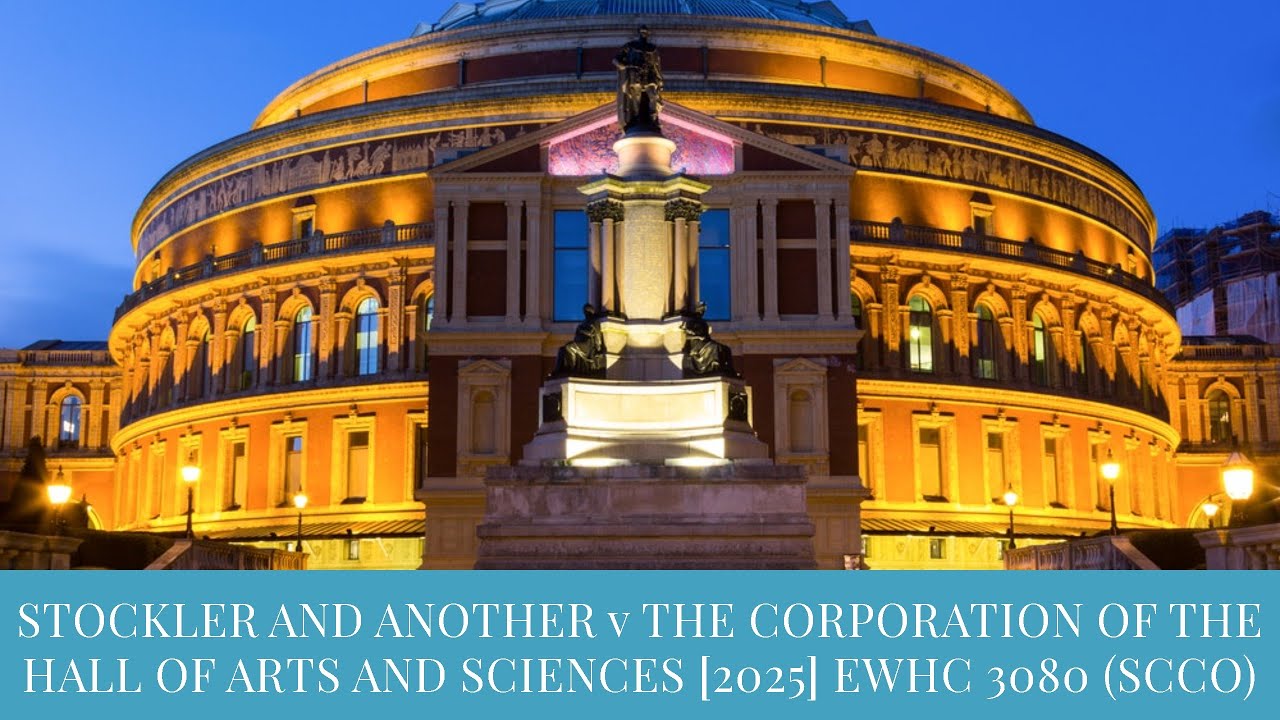
The Senior Courts Costs Office’s decision in Stockler and Another v The Corporation of the Hall of Arts and Sciences [2025] EWHC 3080 (SCCO) confirms that de minimis errors in Part 36 offer forms will not prevent the full statutory consequences applying in detailed assessment proceedings.

Background

The claimants, William Thomas Stockler and Alexander Charles Stockler, are holders of rights to permanent seats in the Royal Albert Hall. The defendant is the corporation which holds a long lease of the Hall. Following underlying litigation, a costs order was made in the defendant’s favour.

The detailed assessment involved hearings on 23-24 June 2025 and 28-29 August 2025 before Deputy Costs Judge Joseph. At the outset, the judge disclosed he had sung in concerts at the Hall as a member of the City of Birmingham Symphony Orchestra Chorus; both parties confirmed this was not a basis for recusal. On the second day of the June hearing, however, the claimants applied for recusal alleging that positive comments about the Hall demonstrated inappropriate influence. The application was dismissed as totally without merit [§7].

Between hearings, the claimants amended their Points of Dispute. At the August hearing, the court disallowed all amendments pursuant to CPR PD 47 paragraph 13(10), finding it unfair and too late to permit them [§13]. The line-by-line assessment was completed on 29 August. The defendant presented a calculation of £120,513.88; the claimants did not challenge the figure and were held to have accepted it by proceeding on the basis they “assumed” it was correct [§14, §34-36]. The court later corrected this to £120,221.98 using CPR 3.1(7) after identifying an inadvertent error that would otherwise have breached the indemnity principle [§39-41].

A separate judgment dated 5 September 2025 [2025] EWHC 2262 (SCCO), which reported on here, addressed proportionality; no further reduction was warranted [§2].

The present judgment deals with the remaining consequential issues.

Costs Issues Before the Court

The court was required to determine four issues [§18]: interest payable on the assessed costs; whether the costs of the detailed assessment should be paid on the indemnity basis (due to a Part 36 offer or unreasonable conduct); the quantum of those costs; and permission to appeal.

The Parties’ Positions

The defendant sought indemnity costs on two grounds [§45]. First, a Part 36 offer dated 29 October 2024 to accept £115,000 inclusive of interest [§46]. The relevant period expired on 19 November 2024 without acceptance. As the assessed costs exceeded the offer, the defendant argued CPR 36.17, as modified by CPR 47.20(4), applied [§47]. Second, unreasonable conduct including pursuing unmeritorious Points of Dispute, failing to engage with ADR, and the opportunistic recusal application [§52].

The claimants argued the Part 36 offer was invalid due to a clerical error on form N242A, where it was misdescribed as a “claimant’s offer” despite the defendant being the receiving party [§54]. They contended it would be unjust to apply Part 36 consequences because their failure to beat the offer resulted from the court’s Ainsworth rulings and disallowance of amendments [§55]. On conduct, they submitted their behaviour did not take the case “out of the norm” per Excelsior v Salisbury Hammer Aspden [2002] EWCA Civ 879 [§56].

The Court’s Decision

The court held the Part 36 offer was valid [§60]. Applying F&C Alternative Investments (Holdings) Ltd v Barthelemy (No 3) [2012] EWCA Civ 843, the error was de minimis, falling into the class of “obvious slips which mislead no-one” [§57]. The offer was clear, made shortly after Replies were served, and provided sufficient information for evaluation [§62].

The court rejected the argument that Part 36 consequences would be unjust. If Ainsworth rulings and similar matters made it unjust, “it would be unjust in almost every detailed assessment to order them. That cannot have been the intention of the Rules Committee” [§61].

Consequently, the defendant was awarded costs on the standard basis until 19 November 2024 and on the indemnity basis thereafter [§63]. Interest on the assessed costs of £120,221.98 was awarded at 8% per annum from 1 July 2024 to 18 November 2024, and at 14% per annum thereafter [§65]. An additional sum of £12,022.20 was awarded under CPR 36.17(4)(d) [§65].

Conduct-Based Indemnity Costs

Separately from Part 36, the court analysed whether conduct justified indemnity costs [§67]. The defendant’s costs schedule only included costs from 27 August 2024 onwards, after expiry of its Calderbank offer [§53]. Conduct prior to the hearing did not sufficiently take the case out of the norm, but conduct from 23 June 2025 was “unreasonable to a high degree” and did take it out of the norm [§86]. This included:

      • The recusal application, found to be “entirely opportunistic and made not as a result of any genuine concern about the bias or apparent bias of the judge, but in an inappropriate attempt to circumvent or to cause to be revisited certain decisions” [§81]
      • Fixed costs arguments that “could not possibly have had any application to the matter” [§70]
      • Amendments to Points of Dispute seeking “another bite at a cherry which had already been swallowed”, with the claimants “oblivious to the self-evident prejudice” to the defendant [§83]

This was largely subsumed by the Part 36 consequences [§86].

Quantum of Costs

The court summarily assessed the defendant’s costs of the detailed assessment [§87]. From the claimed £105,092.89, reductions were made: £2,500 for document work and £750 for other costs (reflecting proportionality on the standard basis element), and £3,000 for duplication between fee earners [§93-95]. Counsel’s fees were adjusted to £16,500 for June and £12,500 for August [§96-97]. The final award was £98,542.89 [§99].

Permission to Appeal

Permission was refused on all ten grounds [§113]. The recusal allegations fell “way short of anything which could possibly have justified such an application” under Porter v Magill [2001] UKHL 67 [§102]. Decisions on fixed costs, amendments, and proportionality were within the court’s discretion [§106-112].

YouTube player

The Chancery Division’s decision in Grijns v Grijns [2025] EWHC 2853 (Ch) establishes that litigation pursued as an “anvil for settlement” through invented evidence and tactical pressure will justify indemnity costs despite mediation obstacles created by both parties.

Background

The dispute concerned a four-bedroomed Georgian terraced house at 31 and 31A Bury Walk, Chelsea, valued at approximately £3.85 million. The property was purchased by Andrew Grijns’s parents in 1994 and vested in his mother, Janice Grijns, by survivorship upon his father’s death in 2019 [§4]. Andrew had lived at the property since 1999 but his licence to occupy was terminated no later than 1 August 2023.

Andrew’s primary claim was founded on proprietary estoppel, asserting entitlement to a two-thirds beneficial interest based on alleged assurances from his parents [§3]. His secondary claim sought aggravated and exemplary damages arising from an incident on 10 June 2023, when Janice and his three brothers entered the property after Andrew refused them access [§5]. Janice counterclaimed for declarations of sole ownership, mesne profits for Andrew’s unlawful occupation, and an account of profits from lettings of the self-contained flat at 31A.

The substantive judgment handed down on 12 June 2025 ([2025] EWHC 1413 (Ch)) dismissed all Andrew’s claims, declared Janice the sole owner, determined Andrew had been a trespasser since 1 August 2023, and ordered him to pay mesne profits [§§1-2]. Andrew’s only success was limiting his rental account liability to 10 May–1 August 2023, due to overlap with mesne profits liability thereafter [§2].

Costs Issues Before the Court

At the consequential hearing held on 19-20 August 2025, the defendants sought all costs on the indemnity basis, characterising Andrew’s claim as weak, speculative, and based on concocted evidence, with litigation conduct including unfounded capacity allegations and a late committal application [§8].

Andrew argued for no order as to costs, contending the defendants’ 10 June 2023 conduct warranted a 50% penalty and their failure to mediate or engage with his Calderbank offers warranted an additional 30-50% reduction—combined penalties totalling 80-100% [§17].

The Court’s Decision

Costs Follow the Event

The court held that the defendants were clear winners and costs should follow the event [§11]. The accounting issue was peripheral, having no significant impact on costs, as the factual narrative concerning the relationship between Andrew and his parents would have been examined regardless for the proprietary estoppel claim [§§13-16]. No allowance was made in Andrew’s favour.

Pre-Litigation Conduct

The court rejected Andrew’s submission that the 10 June 2023 entry warranted a costs penalty. The entry, although forcible in the literal sense, was entirely lawful and not a self-help remedy. The defendants’ intention was not to remove Andrew from possession but to attempt negotiation [§§18-20]. The approach went wrong through failure to inform Andrew of the visit, but it was Andrew’s unlawful refusal of access to his mother that triggered the confrontation [§21].

Taking a wider view, the court found no reason to believe that, absent the 10 June events, settlement would have resulted [§22]. The parties were already very far apart: Andrew asserting claims to 100% or 55% of the property whilst Janice had offered £200,000 to each child [§§23-24]. The court was satisfied the events of 10 June 2023 should have no adverse bearing on the defendants’ costs entitlement [§25].

Mediation and Settlement

The court conducted a detailed analysis and concluded the defendants’ approach had been reasonable throughout [§§76-106]. This was not a case where the defendants ever refused to mediate [§31].

The defendants proposed mediation as early as August 2023 [§79]. However, Andrew imposed unreasonable conditions by refusing to allow his brothers to participate, notwithstanding their position as defendants in the case. The court characterised Andrew’s approach as “high-handed” [§80]. The brothers were defendants against whom penal damages were sought; any sensible settlement had to embrace their position. They had a very real interest in mediation given the relief Andrew claimed would, if granted, have seriously and unfairly affected them [§80]. Moreover, Janice, elderly and in ill-health, was wholly entitled to family support at mediation, with any concerns about improper influence met by her representation by competent lawyers [§81].

Andrew later modified his position to accept his brothers’ attendance, but only for the trespass claim portion of mediation—an approach that remained inappropriate [§§84, 87]. By the time parties were contemplating post-disclosure mediation, delays in disclosure (for which both parties shared responsibility) left insufficient time for meaningful mediation pre-trial [§§88-93]. Master McQuail’s direction of 23 September 2024 recognised this “time pressure” and made only a general ADR direction [§95].

The court distinguished PGF II SA v OMFS Co Ltd [2014] 1 WLR 1386 and its “general rule” that failure to respond to mediation requests is unreasonable. This was not “silent non-engagement” [§106]. Drawing on Gore v Naheed [2017] 3 Costs LR 509, the court held that particular circumstances meant no costs penalty was warranted [§35]. The court concluded: “Far from failing to engage with mediation, the Defendants chose, in circumstances where they could readily and properly [have] eschewed mediation, to contemplate mediation and to continue to do so notwithstanding unreasonable objections raised by Andrew” [§106].

The court also held it would have been wholly reasonable for the defendants to refuse to mediate, given they properly considered Andrew’s claim unfounded and wished to contest it rather than buy him off [§78].

Calderbank Offers

Andrew made four Calderbank offers during the litigation [§67]. Given the property’s £3.85 million value, even his lowest offer of 25% would have required the defendants to pay approximately £900,000. His earlier offers demanded 55%, 40%, and 40% respectively [§§23, 67]. All offers were “well beaten” by the trial outcome, as Andrew recovered nothing and faced substantial liabilities [§§68-69].

The court rejected Andrew’s submission, founded on OMV Petrom SA v Glencore International AG [2017] EWCA Civ 195, that the defendants should have engaged in negotiation [§§29, 73]. Whilst parties should make reasonable efforts to settle and engage with reasonable offers, this does not compel a litigant confronted by wholly unrealistic offers to waste time and costs dealing with them [§74]. The court distinguished Kiam v MGN Ltd (No.2) [2002] EWCA Civ 66: there, the refused offer was better than the eventual outcome, whereas here Andrew’s offers fell very substantially short of the defendants’ complete success [§§71-73].

Indemnity Costs

Indemnity costs were awarded for the main litigation on multiple grounds establishing conduct outside the norm [§§39-65].

The Legal Framework

The court set out the broad principles: conduct must be outside the “norm,” with no need for findings of impropriety or dishonesty, though such findings pave the way for indemnity orders. The court retains discretion not to award indemnity costs even where conduct is demonstrably outside the norm [§§40-41].

Applying Three Rivers District Council v Bank of England [2006] 5 Costs LR 714 and drawing on Hosking v Apax Partners LLP [2018] 5 Costs LR 1125, the court identified circumstances guiding towards indemnity costs orders: (from Three Rivers) speculative, weak, opportunistic or far-fetched claims irreconcilable with contemporaneous documents; and (as added by Master Bowles) cases where evidence is, in material respects, dishonest, and where the true purpose is to exact settlement rather than achieve adjudication on merits [§§42-43].

Invented Evidence

The court found Andrew’s proprietary estoppel claim was not merely weak but based on assurances that had been invented and on evidence about those assurances that had been “constructed” for litigation purposes [§§44-51]. Although determination required lengthy factual enquiry, “this was, when that enquiry was completed, always a very weak claim, which failed at every level” [§44].

None of the pleaded ingredients were established. The alleged assurances were never made and, correspondingly, there was no reliance [§47]. The court stated: “In blunt terms, the assurances, which constituted the core of Andrew’s case, were and must have been invented, as part of the ‘constructive’ process” [§48].

Andrew’s case was tested against substantial contemporaneous evidence. None of the contemporaneous material supported Andrew’s case; much was wholly inconsistent with it [§§49-50]. This was precisely the type of case identified in Three Rivers: a claim “far fetched and irreconcilable with the contemporaneous documents” [§42].

Anvil for Settlement

The court considered that Andrew’s conduct could properly be seen as using litigation as an “anvil for settlement”—adopting Hildyard J’s phrase from Hosking—rather than pursuing adjudication on genuine merits [§§52-54]. The court stated: “It seems to me that this litigation was pursued by Andrew as, in effect, a continuation of his efforts… to preserve, or even enhance, what he undoubtedly saw as his rightful inheritance” [§53].

The court concluded: “Andrew was prepared to ‘construct’ a case and assert assurances by his mother that were never made, in the hope, not realised, that a settlement would be achieved and the claim would not be fully investigated at a trial” [§54].

Capacity Allegations

Over and above the pressure implicit in pursuing unfounded litigation against an elderly woman, Andrew chose to raise and plead capacity issues [§§55-61]. Capacity was raised on two occasions before litigation, repeatedly referenced during proceedings, but never formally abandoned and never properly pursued at trial [§§56-57].

The court found Andrew was never prepared to “follow through” on the capacity issue. If he had genuinely believed Janice’s capacity was in question, he could and should have applied to the court or secured medical evidence. He did neither [§61]. The court concluded: “I am left with the clear conclusion… that the entire capacity issue was never intended for determination but was raised to enhance the pressure on his mother to settle his unfounded claim” [§61].

Tactical Committal Application

Andrew issued committal proceedings against Janice on 11 October 2024, just over one month before trial, founded upon three intemperate messages from August 2023 [§62]. The application was never pursued. The court found the timing “hard not to see… as anything other than an attempt to impose additional pressure on Janice, in the period immediately prior to trial, while, at the same time, inevitably disrupting trial preparation” [§63]. The allegations were “historic” and should have been raised timeously if genuinely concerning [§63].

The court concluded: “Andrew’s motives in respect of the application were not founded in a genuine belief that he had been damaged by his mother’s conduct, in a way that required the exercise of the court’s contempt jurisdiction, but were concerned, rather, with the tactical imposition of pressure upon his mother, in the hope of facilitating a settlement, in his favour, of what I reiterate to have been wholly unfounded litigation” [§64].

The Order

The court stated: “In the result, I am entirely satisfied that, standing in isolation, Andrew’s conduct of this litigation clearly warrants an order for indemnity costs and that there is no discretionary reason not to make such an award” [§65].

However, post-judgment costs were awarded on the standard basis as Andrew’s challenges to the costs order, though unsuccessful, were not unreasonable [§108]. Consequently, Andrew was ordered to pay all costs of the claim and counterclaim on the indemnity basis, save for post-judgment costs on the standard basis [§107].

YouTube player

Indemnity Costs And The High Risk Of Pursuing A Weak Case

Dishonest Evidence And Baseless Allegations Justify Indemnity Costs Order

Fraudulent Non-Disclosure in Financial Remedy Proceedings | Indemnity Costs Award Following Successful Appeal

Speculative Claims, Indemnity Costs And The Effect Of An Approved Costs Budget

Refusal To Mediate Does Not Always Justify Indemnity Costs

Costs Penalty Applied For Silence In The Face Of An Invitation To Mediate | Court Of Appeal Decision